 Today I will be telling everyone about the heritage and culture of the Peranakan Museum! I think very little people in Singapore are aware that there is actually a Peranakan Museum in Singapore that showcases their unique heritage and culture. If you aren't sure about the Peranakan culture, let me give you some interesting information and facts first!
 Peranakans are the descendants of the very early Chinese immigrants to the Nusantara region, including both the British Straits Settlements of Malaya and the Dutch-controlled island of Java among other places, who have partially adopted Malay customs in an effort to be assimilated into the local communities. In short, they are used to describe Indonesian Chinese! Peranakan males are called Babas while Peranakan females are called Nyonyas. Sounds interesting right?
Peranakans originally came from Malacca but came down to Singapore gradually after the years. Now, let me tell you what the Peranakan Museum is all about! The museum houses the world’s finest and m
 ost comprehensive collection of Peranakan artifacts that you can hardly find now! The Peranakan Museum presents a Southeast Asian-wide view of Peranakan culture. Its rich material legacy and heritage are enhanced by state-of-the-art display technology, coupled with educational interactives for the young. This Museum not only caters to adults but has facilities to make it more interesting for youths and children too! Young and old will be fascinated by this unique culture too.
 There are several galleries in the Museum. What makes it interesting is that the galleries have different themes for visitors to explore! Some of the themes are origins of the Peranakan culture, how the Peranakans conduct their weddings, the religion of Peranakans, Nyonyas and the public life of Peranakans! Sounds interesting isn't it? I was most captivated by the wedding gallery! It is really different from Chinese or Western customs. The wedding is an elaborate twelve day affair that is lavish and magnificent! You can also learn more about the wedding rituals that the Peranakans conduct during the wedding such as the exchanging of gifts between families. I was also interested in the food and feasting gallery where you get to see their dining customs and cuisine. The exhibits are enough to make my mouth water! You also can get to see the porcelain food ware used by the Peranakans which are really exquisite and unique. One more interesting part of the Museum is that there are special exhibition galleries that change their themes every few months.
 The Peranakan Museum is located at 39 Armenian Street. You can either take a train down to City hall MRT station and walk 10 mins there or take these buses: 7, 14, 16, 36, 97, 124, 131, 147, 162, 166, 174, 501 Express, 511 Express, 77, 167, 171, 190, 700, 700A and 857
The Museum is opened from 1pm to 7pm on Mondays and 9.30am to 7pm on Tuesdays to Saturday (till 9pm on Fridays) Tickets to the Museum is priced at $6 for adults and $3 for students and senior citizen. There are also guided tours if you need them available in Chinese, English and Japanese. Do visit the Museum as it showcases this very unique culture! You can benefit alot from learning more about this new heritage and culture. I have learnt more about this culture too! I'm sure you will be captivated when you enter this Peranakan world.
★ ★ ★ ★ ★
I give the Peranakan Musuem FOUR out of five stars! I feel that the place really is great to learn more about something that is unqiue and different, the Peranakan culture! Currently on Television, it is airing a serial drama about Peranakans and watching the show reminds me of the Museum! The culture is really very special and intriging. I strongly recommend you to visit this place now!
Posted by: J
 oan
oanPhoto Credits:
http://www.peranakanmuseum.sg
 As one of the most prominent ethnic quarters of Singapore, Little India is a centre for the Indian community of Singapore. There are many exciting shops and interesting places to visit in this queer little town.
Mustafa Shopping Centre

The main building in Little India is the Mustafa Building. Here, you can expect to find electronics, PDAs and household items. It operates on a 24 hour basis and offers a variety of over 120,000 products. Did you know that Mustafa Shopping Centre grew from a little outside stall in 1965?
Flower Shops  On Tuesday and Fridays, the Hindu holy days, gods are honoured with simple strands of flowers. In Hindu culture, people are garlanded as a show of respect and welcome. In Little India street you can find vividly coloured flower shops where you can finde garlands and fresh flowers. Flowers are very important in Indian lifes as a symbol of prosperity. The garland are red yellow and white that symbolise love, peace and purity respectively. This shows that the Indians are strong believers of their religion. The last time I went down to Little India for a field trip, the uncle of a flower shop acutally gave me a garland! Come down to Little India to experience their hospitality today.
Sri Veeramakaliamman Temple Built by indentured Bengali labourers in 1881, this temple is dedicated to the Hindu Goddess Kali, the consort of Shiva. Known as the Goddess of Power, the name "Veeramakaliamman" means "Kali the Courageous". On Tuesdays and Fridays, which are holy days, the streets are busy with devotees on their way to pray, worship and make requests to Kali for blessings. Women who are undergoing the monthly cycle are considered "unclean" and are not allowed to enter temple grounds. The temple is covered with many statues of the deities they worship. I am impressed with the workmanship and the vivid colours of these statues.
Food, Glorious Food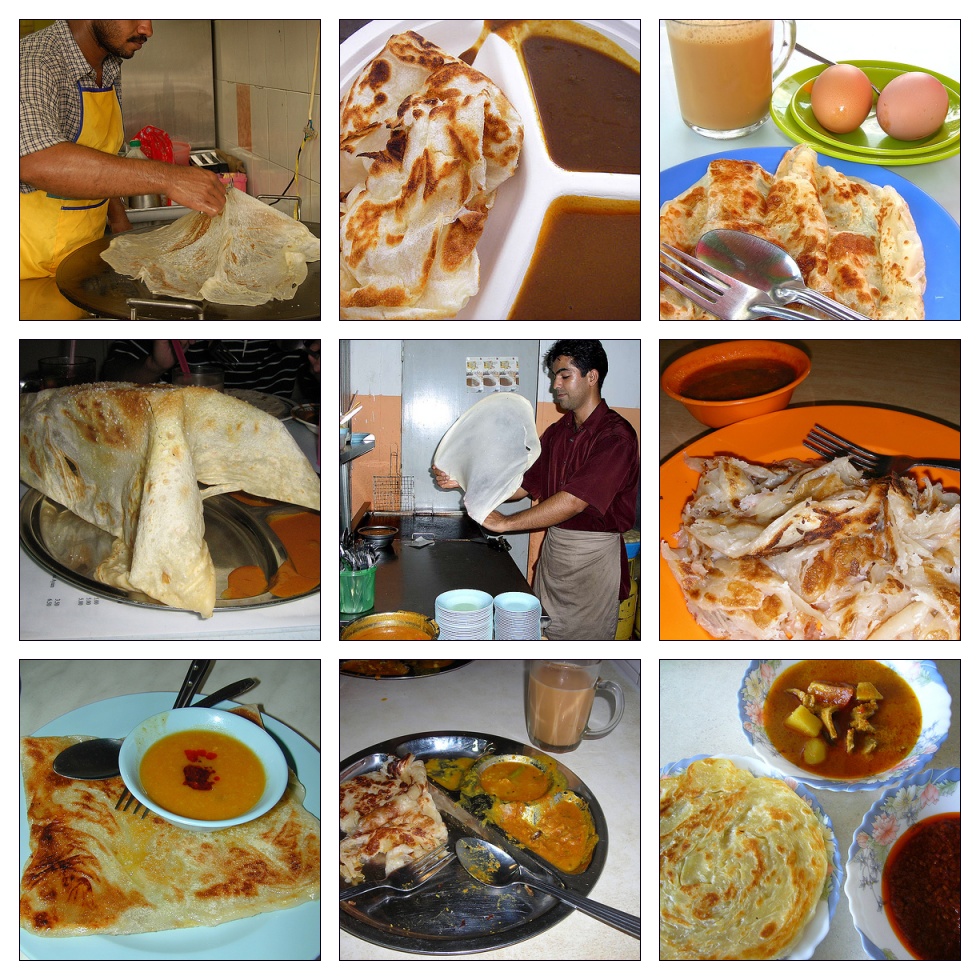
Posted by: Shirley
**** 4/5 stars,
$ very affordable! you just need to pay for the bus ticket/Mrt fare to embark on a journey to explore the rich culture of Singapore's Indian community.
Photo Credits: Wikimedia, Flickr (1), Flickr (2)
Labels: Culture


Upon stepping into the Chinatown Heritage Centre, you will be transported to different periods in the history of Chinatown, allowing you to discover more about the lives of its early dwellers. The simple life of the old days with its harsh living conditions are revealed; allowing you to understand and be aware of the hard life the migrants had led in the past. However, in its days of glory, Chinatown was full of life and activity. There were traditional festivals of the various ethnic groups bring held and celebrated here, making Chinatown a culturally vibrant and unique place.


Visit the Chinatown Heritage Centre to discover more about Chinatown’s rich history through exhibits that convey the real life stories of its previous occupants. You will also have an opportunity to look at typical shop houses of the past, observing how each cubicle was designed. All of these were reconstructed adeptly based on the recollections of the earlier residents. This personal touch will allow you to relate to the fundamental human spirit, which will assure you an enriching experience.
While at Chinatown, you can also get yourself a souvenir and select from a variety of exclusive traditional items at the retail shop.
If you are interested to visit the Chinatown Heritage Centre, it is opened daily from 9am-8pm. Admission fees are priced at S$9.80 for adults and S $6.30 for children. The estimated touring time is around 1.5 hours. The Chinatown Heritage Centre is located at 48 Pagoda Street, Singapore 059207. To get there, you may either take the MRT to Outram Park Station (EW16/NE3) and transfer to Chinatown Station (NE4), or take bus service no. 61, 80, 197 from North Bridge Road. For more details, you may refer here.
Please take a trip down to Chinatown Heritage Centre today! What are you waiting for?
Posted by: Chermaine


Chinatown is a place of great heritage in Singapore where many locals are familiar with. Its local name – Niu Che Shui (Bullock Cart Water) was derived from the fact that every household had to collect fresh water from the wells situated in Ann Siang Hill and Spring Street using bullock-drawn carts then.
Chinatown was developed around 1821 when the pioneer batch of Chinese people from China – Xiamen and Fujian province, arrived in Singapore. These travellers, who were all men, had built their home around the southern area of the Singapore River, which is known as Telok Ayer today.
Chinatown can be divided into four main regions – Kreta Ayer, Telok Ayer, Tanjong Pagar and Bukit Pasoh. Each of these regions has its own unique flavour. The heart of activity lies in the Trengganu/Smith Streets area.
Chinatown is a place full of contrasts and fascinating elements. It is here where many of our forefathers had first form their home in Singapore. Although much of Chinatown had been revamped recently, the old tradition still remains here – historic buildings have been lovingly preserved and century-old beliefs and values are still practiced. During the Chinese New Year period, the entire Chinatown is bustling with people and activity as the various stalls that are set up sell a wide array of festive goods.
In Chinatown alone, there are many places of interest – mosques, temples, markets, parks and shophouses. Here, you will be able to find:
- the Chinatown Heritage Centre, a museum where you will be able to learn the entire history of Chinatown and understand the hard lives of the early Chinese immigrants, which is located in Pagoda Street
- Singapore’s oldest Hokkien temple. Thian Hock Keng Temple
- Sri Mariamman Temple which is Hindu and the oldest in the city
The peaceful co-existence of the diverse places of worship in the same vicinity strongly reflects Singapore’s racial and religious harmony.
You may experience the authentic taste of Chinese culture by visiting a teahouse and the Thong Chai Medical Institute.
While at Chinatown, don’t forget to stop by the Food Street for an alfresco meal and visit the various Chinese pastry shops for home-made tarts and cakes, not to forget the famous dim sum too!
Other Places that you should visit while at Chinatown


Bukit Pasoh – also known as the Street of Clans; houses a number of Chinese cultural and clan associations


Chinatown Heritage Brands – the oldest ethnic district with over a hundred years of history; has various Chinese medicinal halls, jewellers, teahouses and eateries
For more details, http://www.visitsingapore.com/publish/stbportal/en/home/what_to_see/ethnic_quarters/chinatown/heritage_brands.html


For more details, http://www.visitsingapore.com/publish/stbportal/en/home/what_to_see/ethnic_quarters/chinatown/chc.html

For more details, http://www.visitsingapore.com/publish/stbportal/en/home/what_to_see/ethnic_quarters/chinatown/Chinatown_night_market.html

For more details, http://www.visitsingapore.com/publish/stbportal/en/home/what_to_see/ethnic_quarters/chinatown/kreta_ayer.html
Telok Ayer – one of the first streets in Chinatown
For more details, http://www.visitsingapore.com/publish/stbportal/en/home/what_to_see/ethnic_quarters/chinatown/telok_ayer.html

Tanjong Pagar – rows of pubs, bars and karaoke lounges in exquisitely conserved pre-World War II shophouses
For more details, http://www.visitsingapore.com/publish/stbportal/en/home/what_to_see/ethnic_quarters/chinatown/tanjong_pagar__ethnic.html
To get to Chinatown, you may travel by MRT and either alight at Outram Park (EW16/NE3) or Chinatown (NE4) stations where it is only of a short walking distance.
References
http://www.newasia-singapore.com/places_to_go/chinatown.htmlhttp://www.visitsingapore.com/publish/stbportal/en/home/what_to_see/ethnic_quarters/chinatown.htmlhttp://www.visitsingapore.com/publish/stbportal/en/home/what_to_see/ethnic_quarters/chinatown.html
Posted by: Chermaine
I would rate this place **** (4 out of 5 stars) as there is a large array of activities to take part in and shops to patronize. I’m quite certain that you will not be bored here as there’s simply so much to see!
In terms of cost, generally I would say that it is affordable, but as to what extent, it will really have to depend on what you are purchasing as there’s simply a lot of things and shops to choose from and the costs will vary from one item to another. With regards to the pricing of the entrance fees of the various locations, I would also say that it is quite reasonable. So, come on down to Chinatown today!
Labels: Culture


